How do you fix squeaky door hinges?
Remove the hinge pin, clean off any rust with 120-grit sandpaper, apply white lithium grease or silicone spray to the pin, and reinsert it. The whole fix takes under 10 minutes. Below is a complete breakdown of why hinges squeak, which lubricants work (and which don't), and when replacement makes more sense than repair.
Why do door hinges squeak?
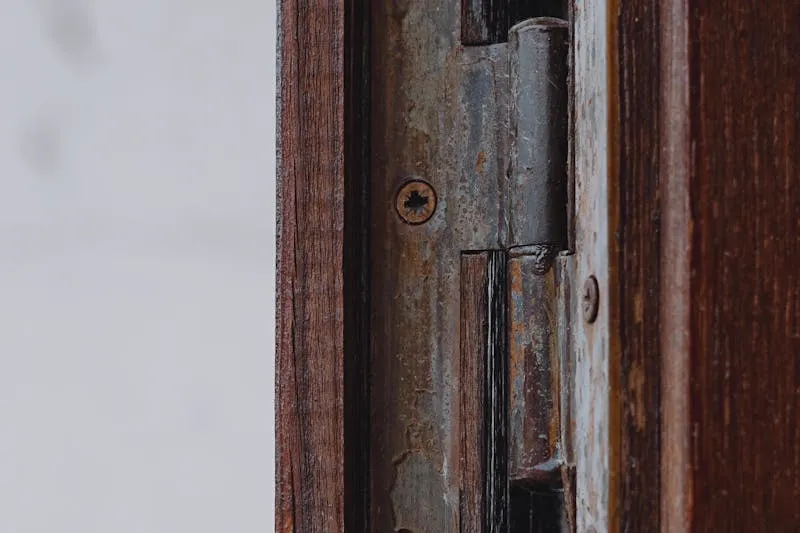
Door hinges squeak because of metal-on-metal friction inside the hinge barrel. The hinge pin rotates inside the knuckle — the interlocking cylindrical barrel at the center of the hinge — every time the door opens or closes. When factory lubrication dries out, the bare metal surfaces produce friction that you hear as a high-pitched noise.
The mechanism behind the sound is called stick-slip friction, according to research published by the Harvard John A. Paulson School of Engineering and Applied Sciences in February 2026. The pin and knuckle briefly stick under static friction, then release, generating supersonic detachment pulses — rapid, wrinkle-like waves along the contact surface. The repetition rate of those pulses sets the pitch of the squeak.
Four conditions trigger the problem:
- Dried lubrication — factory grease breaks down after months or years of use, as noted by Monroe Engineering.
- Dust and debris — particles enter the knuckle and grind between pin and barrel, accelerating wear (Monroe Engineering).
- Rust and corrosion — moisture on bathroom, kitchen, and exterior doors corrodes the pin surface, creating rough contact patches.
- Loose screws — when hinge screws loosen from settling or use, the plates shift and force the pin through the knuckle at an angle, according to This Old House.
What is the best lubricant for door hinges?
White lithium grease is the best overall choice. It lasts 6 to 12 months per application, resists water, and stays put inside the barrel without dripping, according to Bob Vila's lubricant comparison. It works especially well on exterior doors and heavy doors that get frequent use.
Silicone spray is a close second for interior doors. It lasts 3 to 6 months, doesn't attract dust, and leaves no visible residue (Bob Vila). Apply it without removing the pin by spraying into the top and bottom of the knuckle.
Petroleum jelly is the best household alternative. Family Handyman recommends it because it adheres to the pin, won't run down the door, and is non-toxic. Longevity is comparable to silicone spray at 3 to 6 months.
How do you remove a door hinge pin?
Place an 8d nail or thin nail set underneath the pin head at the bottom of the hinge knuckle, according to Bob Vila. Tap upward with a hammer until the pin head rises above the top of the knuckle. Pull the pin out by hand. If the pin binds and won't move, lift up on the door handle to relieve downward pressure on the hinge, then tap again. Most doors have two or three hinges — work on one at a time so the door stays supported.
Can you fix a squeaky hinge without removing the pin?
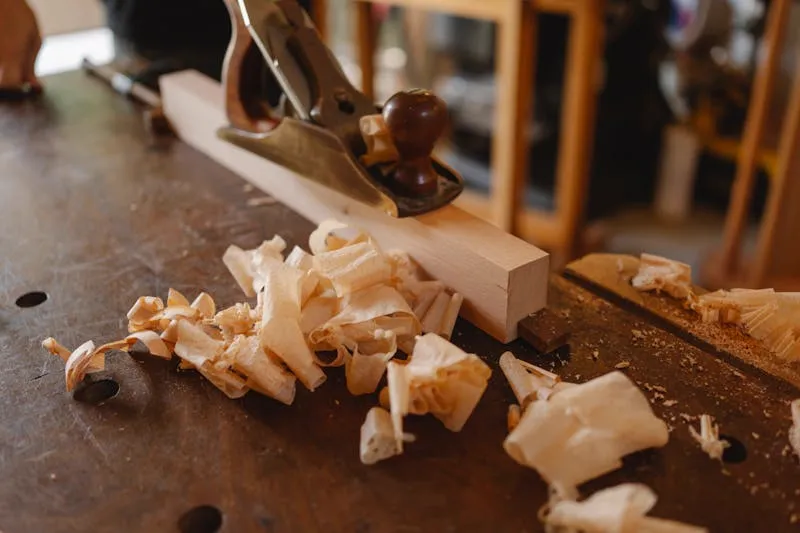
Yes. Slip a piece of thin cardboard around the hinge barrel to protect the surrounding woodwork from overspray, as recommended by Family Handyman. Give the knuckle a short burst of silicone spray from both the top and bottom. Work the door back and forth several times to distribute the lubricant through the barrel. This no-removal method is faster but typically lasts 2 to 3 months less than a full pin removal and relubrication, because the spray can't reach every contact surface inside the knuckle.
Why doesn't WD-40 work on door hinges?
WD-40 is a solvent and water displacer, not a lubricant, according to WD-40's own product documentation. It dissolves existing grease on the hinge, provides roughly 2 to 4 weeks of quiet, then leaves the metal drier and more exposed than before (Schlage). Its solvent base also attracts dust and dirt as it evaporates, which accelerates wear inside the barrel (Bob Vila).
If you want to use WD-40, treat it as a cleaning step only: spray the hinge to dissolve grime, wipe it clean, then apply a proper lubricant like white lithium grease or silicone spray on top.
Our pick: White lithium grease spray on Amazon — one can covers every hinge in the house.
How long does hinge lubricant last?
Longevity depends on the lubricant and the door's location and usage. Based on manufacturer guidance and editorial testing documented by Bob Vila:
- White lithium grease: 6 to 12 months
- Silicone spray: 3 to 6 months
- Petroleum jelly: 3 to 6 months
- WD-40: 2 to 4 weeks (not recommended for this reason)
Exterior doors, bathroom doors, and doors used more than 20 times per day will fall toward the shorter end of each range. Doors in dry, climate-controlled interiors last longest between applications. Cleaning the pin and knuckle before applying lubricant extends the interval significantly because it removes the abrasive particles that cause early re-squeaking. If you skip the cleaning step, expect roughly half the longevity from any lubricant.
How do you prevent door hinges from squeaking?
Lubricate hinges once every 6 to 12 months with silicone spray or white lithium grease, as recommended by Monroe Engineering. Wipe hinges during routine household cleaning to prevent dust from entering the barrel. Check and tighten hinge screws once a year — loose screws cause misalignment that produces friction even on well-lubricated hinges (This Old House). In high-traffic areas like front doors and bathroom doors, install solid brass or stainless steel hinges, which resist wear and corrosion far longer than cheap steel (Monroe Engineering).
When should you replace a door hinge instead of lubricating it?
Replace the hinge when it shows severe corrosion with visible pitting on the pin or inside the knuckle, when the knuckle has noticeable play or wobble even with the pin fully seated, or when screw holes in the door or frame are too stripped to hold new screws even with the toothpick repair method described by Lowe's. If you have lubricated the same hinge more than three times in a single year, the hinge is likely worn past the point where maintenance is effective, and a new hinge will solve the problem permanently (HGTV). A standard interior butt hinge costs $3 to $8 at any hardware store.
What household items can silence a squeaky hinge?
Petroleum jelly is the most effective item you likely already own. Family Handyman recommends it because it adheres well, doesn't drip, and is non-toxic. Dab it onto the pin with a cotton swab before reinserting.
Bar soap rubbed directly on the hinge pin provides temporary relief — the fats and oils in soap (typically palm and coconut oil) reduce friction for a few weeks. Paraffin candle wax melted onto the pin fills micro-gaps in the metal surface and resists moisture well. Olive oil and cooking spray technically work but attract dust as they break down and can go rancid over time, producing odor on warm days. For any lasting fix beyond a few weeks, a purpose-made lubricant is worth the small investment — a can of white lithium grease or silicone spray costs under $8 and covers every hinge in the house.
How do you fix a hinge that squeaks because of loose screws?
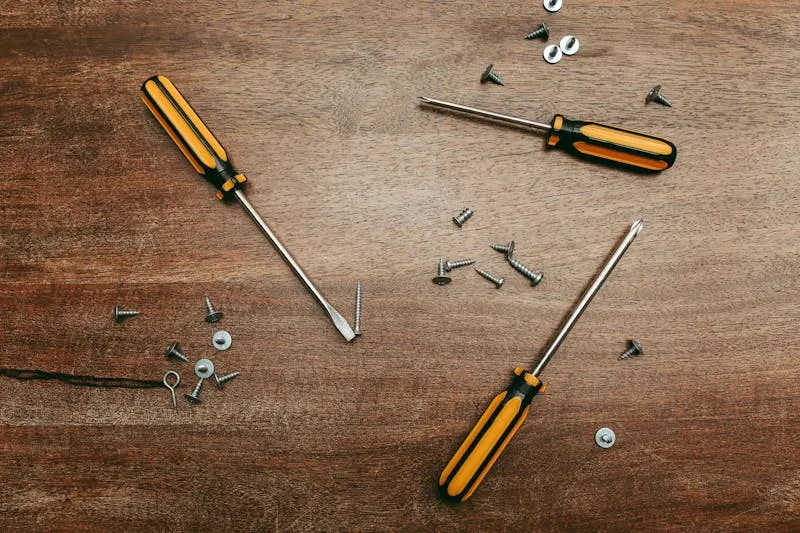
Check all screws on both the door-side and frame-side hinge plates, according to This Old House. Tighten any that have worked loose with a screwdriver. If a screw hole is stripped and won't hold, remove the screw, insert a wooden toothpick or golf tee coated in wood glue into the hole, let it dry, trim flush, and drive the screw back in (Lowe's). This reinforces the hole and gives the screw new wood to grip. If multiple screw holes on the same hinge are stripped, replacement of the hinge and plugging the old holes with dowels is the more durable solution.
Our pick: White lithium grease spray on Amazon — one can covers every hinge in the house.
Get our door hardware maintenance checklist — a printable guide to keeping every hinge, latch, and strike plate in your home quiet and working smoothly.
Sources
- Djellouli, A. et al. "The Physics of a Squeak." Harvard John A. Paulson School of Engineering and Applied Sciences, February 2026.
- "Why Hinges Squeak (And How to Prevent It)." Monroe Engineering (OneMonroe).
- "How To Quiet a Squeaky Door." This Old House.
- "How to Silence a Squeaking Hinge." Family Handyman.
- "How to Fix a Squeaky Door." Bob Vila.
- "How to fix a squeaky door hinge." Schlage.
- "How To Stop A Squeaky Door Hinge in 4 Steps." WD-40.
- "The 6 Best Lubricants for Squeak-Free Door Hinges." Bob Vila.
- "How to Fix Squeaking Door." Lowe's.
- "How to Fix a Squeaky Door." HGTV.